1. What Is Cuddle Therapy?
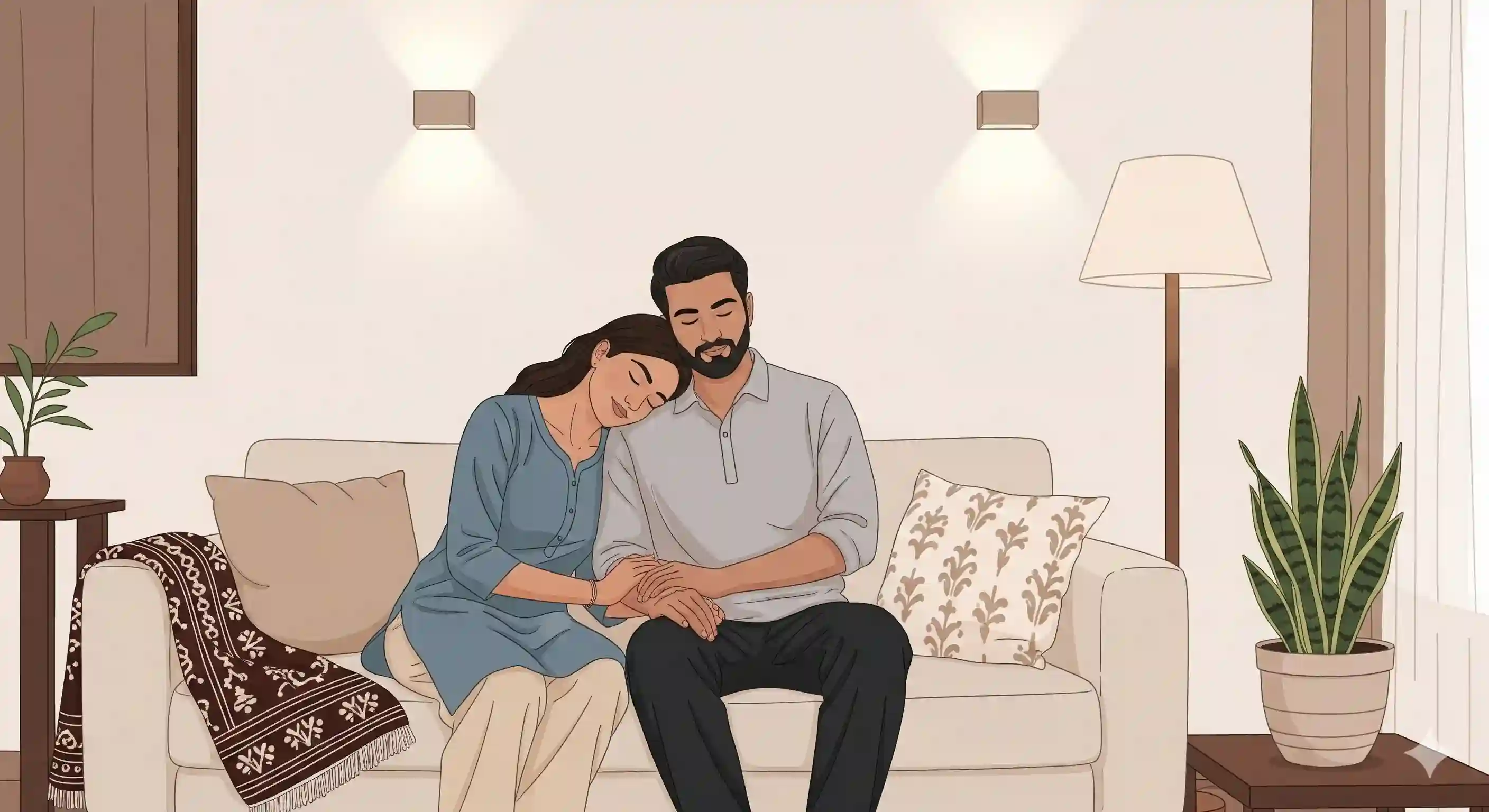
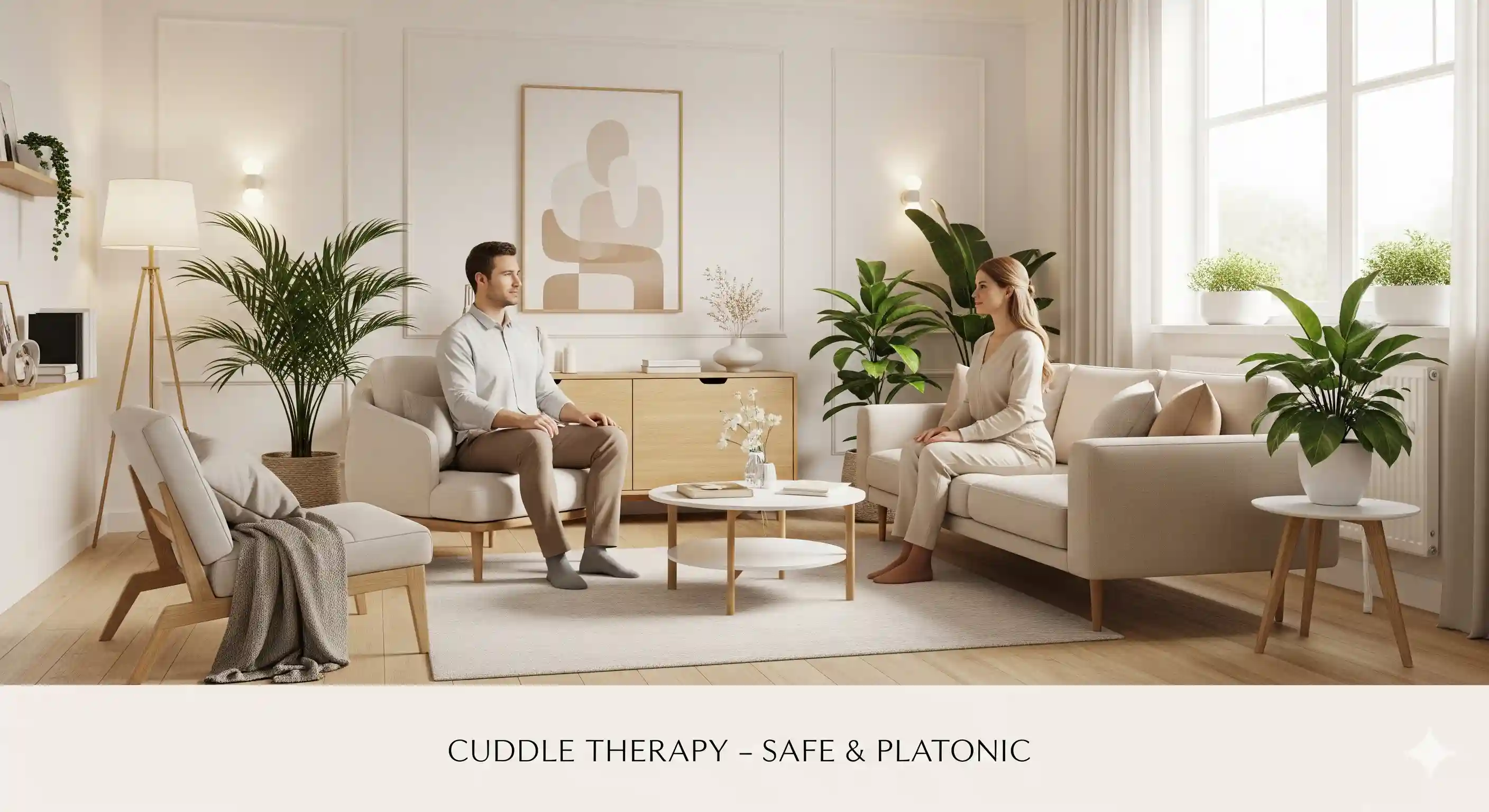
At its core, Cuddle Therapy is a structured, consent-based wellness modality where a trained practitioner provides non-sexual, platonic physical intimacy to a client.
However, to truly understand it, one must understand the concept of the "Platonic Container."
Unlike a hug from a friend (which carries social obligations) or a romantic partner (which carries sexual expectations), a Cuddle Therapy session exists in a "container" of pure presence. The practitioner is not there to "get" anything from you; they are there entirely to hold you. This unique dynamic allows the client to drop their "social mask" and enter a state of deep rest.
It is NOT:
-
Sexual Service: It is as non-sexual as a massage or physiotherapy session.
-
Dating Surrogate: Practitioners are professionals, not "girlfriends/boyfriends for hire."
-
Talk Therapy: While you can talk, the focus is on somatic (body-based) processing, not cognitive analysis.
2. The Science: The "Cortisol-Oxytocin Seesaw"
Most articles mention oxytocin, but the science goes much deeper. A professional session triggers a specific neuro-endocrine cascade known as the "Seesaw Effect."
A. The "Crash" of Stress Hormones
When the body receives sustained, safe touch (specifically "Deep Pressure Stimulation"), it signals the amygdala (the brain's fear center) to stand down.
-
Cortisol Awakening Response (CAR): Studies suggest that affectionate touch can lower the "Cortisol Awakening Response" the next morning, meaning you wake up feeling less anxious the day after a session.
-
Vasopressin Reduction: This hormone is linked to aggression and territorial tension. Cuddling actively depletes it, replacing defensiveness with openness.
B. The "Rise" of Restoration
-
Oxytocin: The famous "bonding molecule" that lowers heart rate and induces a "tend-and-befriend" state.
-
Vagal Tone Improvement: The Vagus Nerve connects your brain to your heart and gut. Safe touch increases "vagal tone," improving digestion, lowering blood pressure, and increasing Heart Rate Variability (HRV)—a key marker of longevity.
-
Lymphocyte Boost: There is evidence that the relaxation response from touch can increase the production of white blood cells (lymphocytes), actually boosting your immune system.
3. The Menu: Specialized Cuddle Positions
A professional session is not just "lying around." Practitioners use specific architectures of comfort to target different emotional needs.
| Position | The Mechanism | Best For |
| The Spoon | Full spinal contact; the "Big Spoon" acts as a protective shield. | Safety & Security. Perfect for those feeling vulnerable or "exposed" in daily life. |
| The Koala | The client straddles the practitioner (seated), head on shoulder. | Deep Nurturing. Mimics the primary caregiving bond; excellent for "re-parenting" work. |
| The Back-to-Back | Spines touching, but faces looking away. | Autonomy. For clients who want connection but feel overwhelmed by eye contact or intimacy. |
| The Head-on-Lap | Client lies down; practitioner strokes hair/head. | Mental Release. Ideal for "Touch Starved" intellectuals or those with busy minds (The "CEO Special"). |
| The Heart-to-Heart | Hand on chest/heart area (over clothes). | Grief & Loss. A somatic anchor for processing heavy emotional pain. |
4. The Session Architecture: What Actually Happens?
A professional session follows a strict "Bell Curve" of intensity to ensure safety.
Phase 1: The Intake & Consent Workshop (10-15 Mins)
Before any touch happens, the "Rules of Engagement" are established.
-
The "No" Exercise: You practice saying "No" to the practitioner. This builds the "Consent Muscle," teaching you that your boundaries will be respected immediately.
-
Hygiene Check: Ensuring both parties are fresh, scent-neutral (to avoid allergy/sensory overload), and wearing appropriate clothing (minimum tank top/shorts).
Phase 2: The "Drop In" (40-50 Mins)
This is the main body of the session. You might start with holding hands and graduate to spooning. The practitioner constantly checks in: "How is this pressure? Would you like to shift?"
-
Note: It is normal to cry, laugh, or fall asleep. This is called a Somatic Release.
Phase 3: The Integration (Last 10 Mins)
The session never ends abruptly. The practitioner guides you back to a seated position, offers water, and helps you "ground" yourself before you step back into the chaotic world.
5. The Benefits: A 3-Tier Healing Model
Tier 1: Physiological ( The Body)
-
Pain Management: Oxytocin acts as a mild analgesic (pain reliever).
-
Sleep Restoration: Regulates circadian rhythms for insomnia sufferers.
-
Lower Cardiac Load: Reduces systolic blood pressure during stress events.
Tier 2: Emotional (The Heart)
-
Combatting "Skin Hunger": Alleviates the deep, physical ache of loneliness.
-
Trauma Recovery: rewires the brain to associate touch with safety rather than danger (crucial for PTSD survivors).
-
Grief Support: Provides a physical container for sorrow when words fail.
Tier 3: Social (The Mind)
-
Boundary Training: Learning to ask for what you want (and refuse what you don't) in a session translates to better confidence in work and family life.
-
Rejection Resilience: Learning that saying "no" doesn't destroy a connection.
6. Code of Conduct: The "Safety Net"
To ensure this remains a therapeutic practice, strict ethical guidelines are non-negotiable.
-
Strictly Platonic: No touching of "swimsuit areas." No kissing. No sexual energy.
-
The "Tap Out" Rule: Either party can end the session or change position instantly with a verbal cue or a double-tap signal.
-
Hygiene Protocols: Fresh breath, clean clothes, and no strong perfumes are mandatory.
-
Confidentiality: Who you are and what you release during a session stays in that room (HIPAA-style privacy).
7. FAQ: Debunking the Myths
(Designed for "People Also Ask" SEO snippets)
Q: Is Cuddle Therapy just for single/lonely people?
A: No. Many clients are married individuals whose partners have different "Touch Languages," or high-performance executives suffering from burnout who need a space where they don't have to be "in charge."
Q: What if I get aroused?
A: It is a natural biological reaction, not a moral failing. Practitioners are trained to handle this neutrally. We simply pause, shift positions, and allow the reaction to subside without shame, ensuring the session remains platonic.
Q: Can I talk during the session?
A: Yes, but you don't have to. Many clients prefer "Noble Silence" to let their nervous systems rest, while others process their day. The choice is yours.
Conclusion
We often underestimate the power of a hand on a shoulder or a safe embrace. Cuddle Therapy is not just about "feeling good"—it is about restoring our biological baseline. In a world that forces us to be "hard" and independent, it offers a rare sanctuary to be soft, held, and human.