Introduction
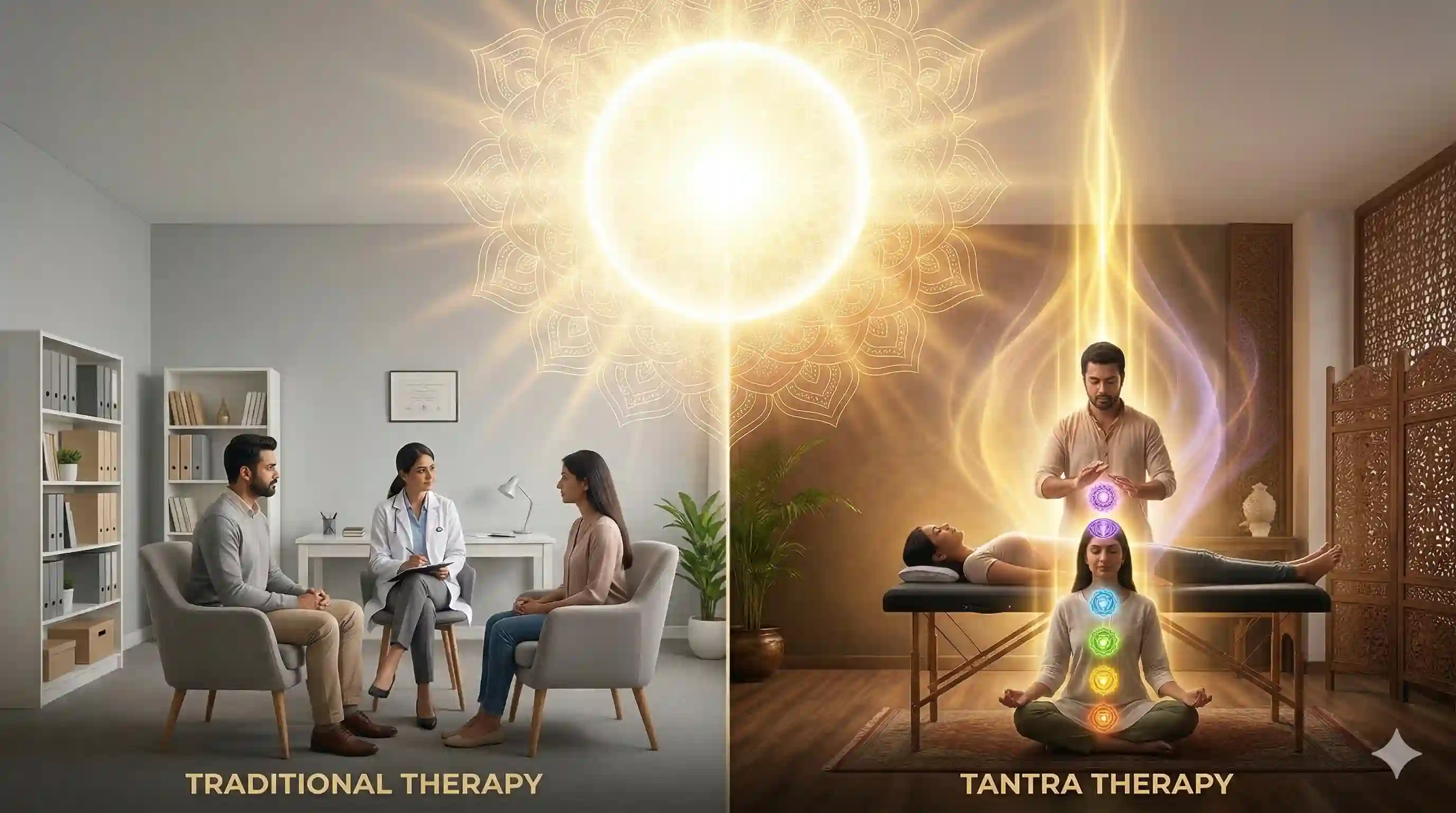
Tantra is an ancient and profound spiritual system that originated on the Indian subcontinent. It is not a single religion but a holistic method that blends rituals, meditation, philosophy, and physical practices to help individuals deepen their awareness, transform consciousness, and experience inner unity. Wikipedia
What Does the Word Tantra Mean?
The term Tantra comes from Sanskrit roots that mean “to stretch,” “to weave,” or “to spread.” In spiritual context, it refers to a system or framework that interconnects body, mind, energy, and consciousness into a unified practice.
The metaphor of weaving suggests how different aspects of life and inner experience are brought together into a seamless whole — like threads on a loom.
Historical Origins
Early Beginnings
Although Tantric ideas existed earlier in Indian traditions, Tantra crystallized into a distinct spiritual movement around the middle of the first millennium CE. It first arose in Hindu contexts such as Shaivism and Shaktism, then spread into Buddhism as well.
Spread into Other Traditions
Over time, Tantric teachings were adapted into Buddhist Vajrayana, where they became central to advanced meditation and ritual practices.
Tantric teachings were traditionally transmitted from teacher to student and often written as dialogues between gods and goddesses in sacred texts known as Tantras.
Philosophical Foundations
Unity of Life and Spirit
One of the core ideas in Tantra is that every part of life — physical, emotional, mental — is sacred and interconnected. It does not see the spiritual as separate from the material. Instead, it teaches that awareness and experience in everyday life can become pathways to transformation.
Emphasis on Experience
Rather than just relying on belief or abstract philosophy, Tantra is experiential — meaning the practitioner learns through direct engagement with practices designed to awaken inner energies and deepen awareness.
Core Practices of Tantra
Tantra uses a range of tools and techniques to support spiritual growth:
1. Mantra (Sacred Sounds)
Repetition of specific sounds or syllables that focus attention, raise awareness, and harmonize inner energy.
2. Meditation & Visualization
Deep concentration practices that still the mind and reveal deeper states of consciousness.
3. Yoga and Breathwork
Physical postures and controlled breathing help balance body and breath, leading to heightened presence.
4. Yantra and Symbolic Rituals
Use of geometric diagrams, symbols, and rituals that act as focal points for concentration and energy alignment.
What Tantra Is Not
There are many popular misconceptions about Tantra:
Myth – Tantra Is Just About Sexuality
In modern popular culture, Tantra is often misunderstood as being primarily about erotic or sensual practices. However, this view is a partial distortion of the larger tradition. While some Tantric systems include techniques that acknowledge sexual energy, the core goal of Tantra is spiritual awakening and self-realization, not simply sensual experience.
Myth – Tantra Is Dark Magic or Superstition
Another misconception is that Tantra is associated with black magic or harmful rituals. Historically and philosophically, true Tantra is a serious spiritual discipline focused on inner transformation, not superstition or harmful practices.
Goals and Purpose of Tantra
The primary aim of Tantra is to help the practitioner:
-
Awaken deeper consciousness
-
Integrate inner energy with awareness
-
Transform habitual patterns of thought and perception
-
Experience unity of body, mind, and spirit
-
Realize one’s own true nature beyond ordinary limitations
This means that Tantra is often described not just as a set of practices, but as a way of living consciously.
Branches and Variations
Tantric traditions developed in many forms, often aligned with different deities or philosophical schools:
-
Hindu Tantra: Focuses on union with divine energies like Shiva and Shakti.
-
Buddhist Tantra (Vajrayana): Uses Tantric methods to accelerate insight and liberation.
Each tradition uses its own rituals, mantras, and visualizations, but the underlying goal of inner transformation remains similar.
How Tantra Is Practiced Today
Contemporary Tantra appears in many forms:
Traditional Lineages
Some students still receive direct training from teachers in classical lineages of Tantra, learning rituals, meditations, and spiritual methods passed down through generations.
Modern Adaptations
In modern yoga and meditation communities, aspects of Tantra are integrated into mindfulness training, breathwork, and spiritual psychology.
Regardless of form, the essence of practice remains the same: awaken awareness and live with conscious presence.
Key Benefits of Tantra Practice
While Tantra is a spiritual path, its practices offer profound benefits for modern mental and physical well-being. By integrating body, mind, and energy, practitioners often experience:
-
Nervous System Regulation: Tantric breathwork and meditation can switch the body from a "fight or flight" state to a deep "rest and digest" mode, significantly reducing cortisol levels.
-
Emotional Healing: Unlike some methods that suppress difficult emotions, Tantra encourages witnessing and accepting feelings. This process helps release deep-seated trauma and emotional blockages.
-
Enhanced Focus and Presence: Regular practice trains the mind to stay in the "here and now," improving concentration in daily work and relationships.
-
Deepened Relationships: Tantra teaches us to see the divine in others. This shift in perspective can dissolve conflict and foster deeper intimacy and connection with partners, family, and colleagues.
Tantra vs. Yoga: What’s the Difference?
Many people confuse Tantra and Yoga, or view them as separate paths. In reality, they are deeply intertwined but have distinct approaches:
-
Yoga (The Path of Discipline): Classical Yoga often focuses on restraint (Yama/Niyama) and transcending the physical body to reach enlightenment. It is often described as a ladder to climb out of the mundane.
-
Tantra (The Path of Acceptance): Tantra focuses on expansion. It does not reject the world or the body; instead, it "weaves" every aspect of life—including senses, desires, and emotions—into the spiritual path.
In simple terms: Yoga tends to separate the observer from the experience, while Tantra seeks to merge them. Both ultimately lead to the same goal of self-realization (Moksha), but Tantra offers a path for those who wish to find spirituality within their worldly life rather than apart from it.
The Role of Chakras in Tantra
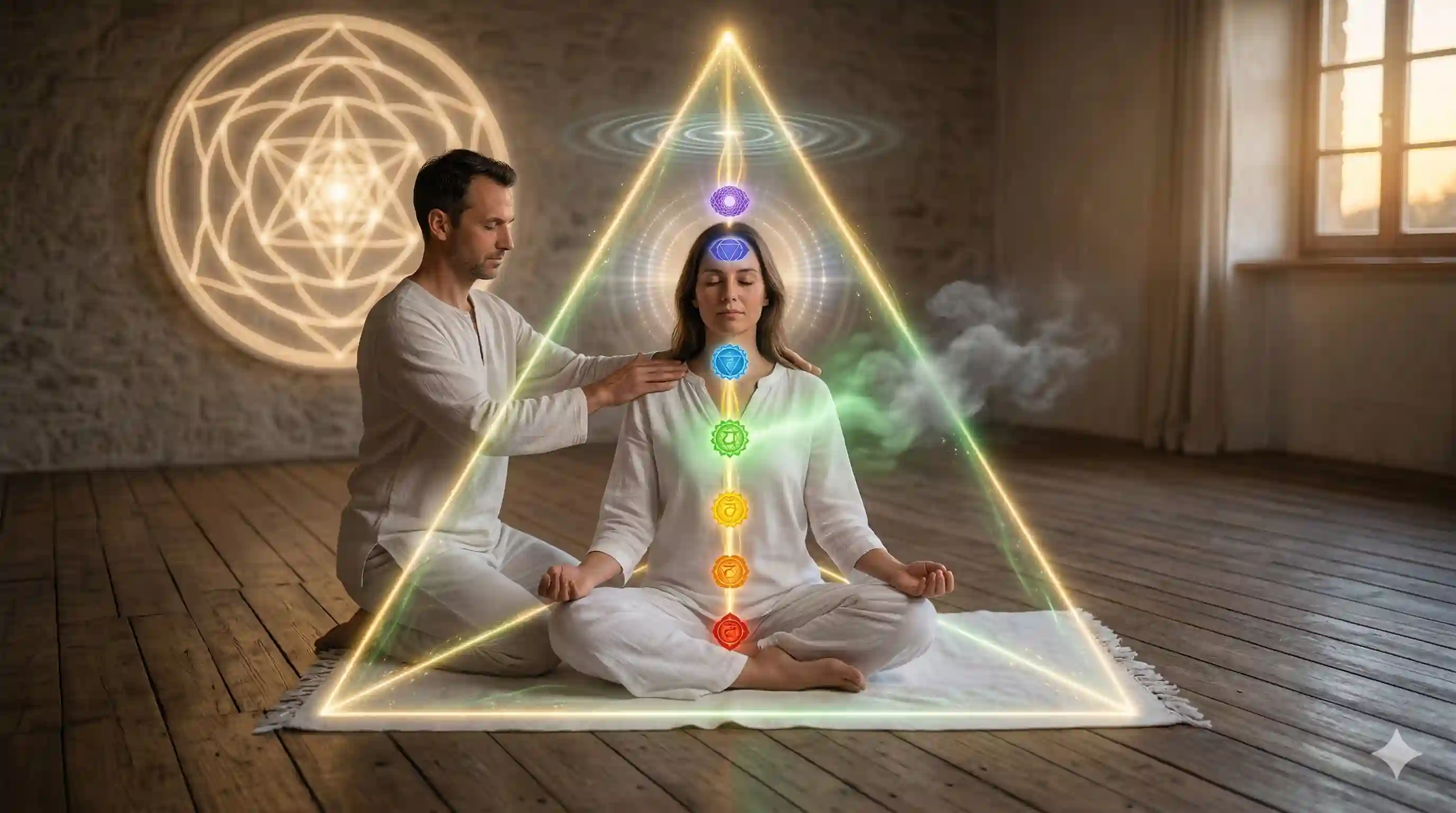
The concept of Chakras (energy centers) is central to Tantric physiology. Tantra views the human body not just as biological matter, but as a vessel of divine energy (Shakti).
There are seven main chakras aligned along the spine, each governing different aspects of our physical and psychological health:
-
Muladhara (Root): Stability and grounding.
-
Svadhishthana (Sacral): Creativity and emotional flow.
-
Manipura (Solar Plexus): Willpower and action.
-
Anahata (Heart): Love, compassion, and connection.
-
Vishuddha (Throat): Truth and expression.
-
Ajna (Third Eye): Intuition and insight.
-
Sahasrara (Crown): Connection to higher consciousness.
Tantric practices like Kundalini Yoga aim to awaken dormant energy at the base of the spine and guide it upward through these centers to achieve a state of awakened consciousness.
Simple Tantric Exercises for Beginners
You do not need to be an ascetic to begin experiencing Tantra. Here are two simple practices to incorporate into your daily routine:
1. The "Three-Part Breath" (Dirga Pranayama)
This practice connects you to your physical body and calms the mind.
-
Sit comfortably with a straight spine.
-
Inhale slowly, filling your belly first, then your ribcage, and finally your upper chest.
-
Exhale in reverse order: release the chest, then the ribs, then the belly.
-
Repeat for 5-10 minutes, focusing entirely on the sensation of the breath moving like a wave.
2. Eye Gazing (Soul Gazing)
A powerful practice for connection, which can be done with a partner or even in a mirror.
-
Sit opposite your partner (or mirror).
-
Gaze into the left eye (which is connected to the emotive right brain).
-
Relax your focus and simply "receive" the image of the other person without judgment or analysis.
-
This practice dissolves the barriers of the ego and fosters a sense of oneness.
Conclusion
Tantra is a rich and comprehensive spiritual tradition that goes far beyond common stereotypes. It blends ritual, meditation, philosophy, and psychological insight to support individuals in weaving together all aspects of life into a path of self-realization and inner transformation.
FAQ (Frequently Asked Questions)
Q: Is Tantra a religion?
A: No — Tantra is a broad spiritual framework used within Hinduism and Buddhism, not a separate religion.
Q: Does Tantra only involve spiritual practice?
A: Yes — the core purpose of Tantra is spiritual growth and awareness, although some practices use physical or energetic methods.
Q: Is Tantra only for advanced practitioners?
A: Tantra can be practiced at many levels — from beginner meditation to advanced yogic techniques — though traditional training often involves a teacher