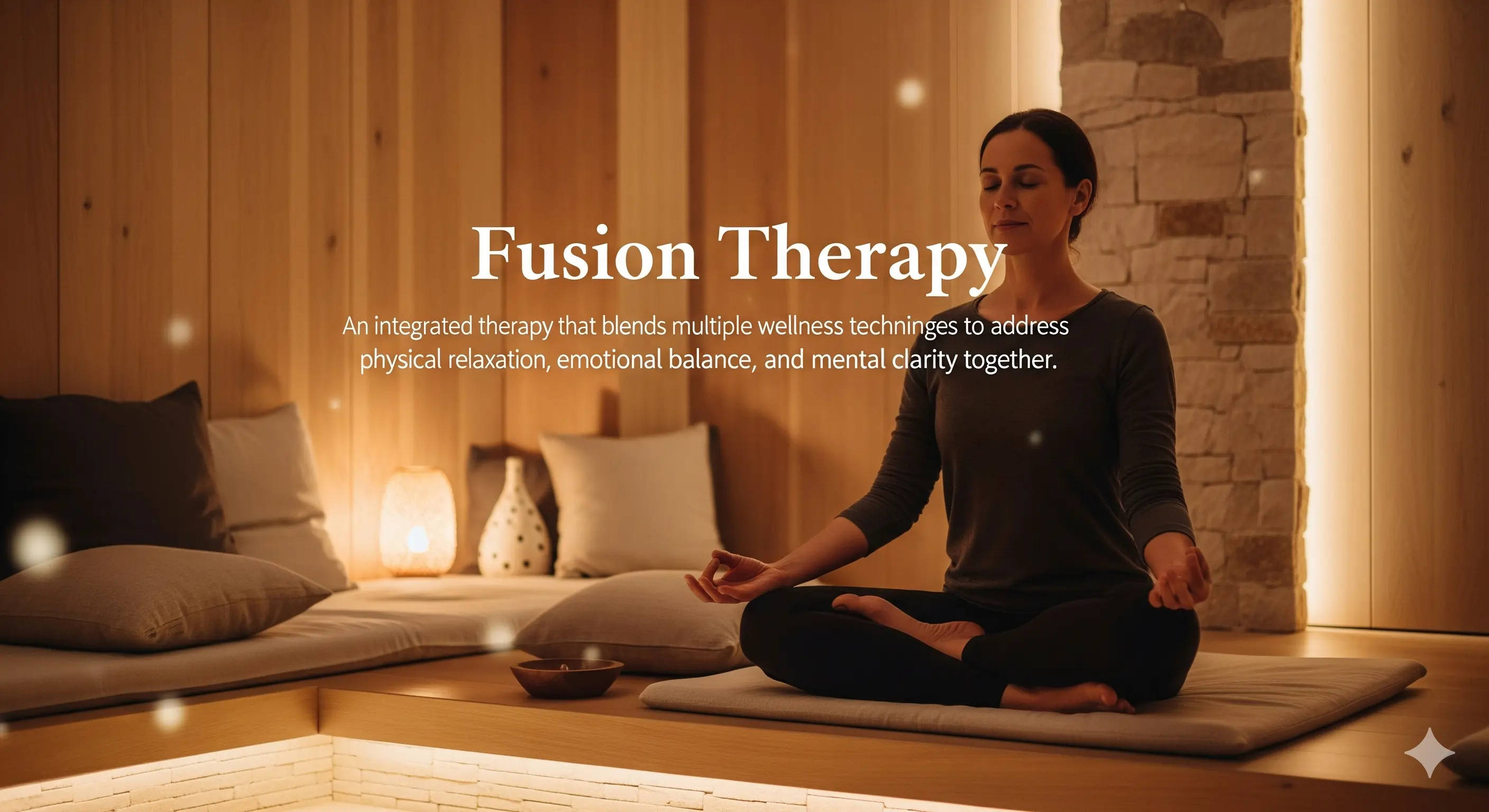
Fusion Therapy
Integrative therapeutic approach combining multiple evidence-based methods
Quick Session Summary
- Restores flow of vital energy and mental clarity.
- Conducted in a private, clean, and safe wellness environment.
- Fully professional and strictly non-sexual holistic bodywork.
What is Fusion Therapy?
Fusion Therapy at Sarv Tantra is a premier, strictly non-sexual Integrative psychotherapy therapy designed to promote deep healing, stress relief, and holistic rejuvenation. Guided by the principle that Integrative therapeutic approach combining multiple evidence-based methods, this professional treatment integrates specialized bodywork, energy healing, and mindfulness techniques. Fusion Therapy is an integrative therapeutic approach that combines techniques from multiple established therapy models into a single, personalized treatment plan. Instead of relying on one fixed method, fusion therapy adapts evidence-based practices according to the individual’s emotional, cognitive, and behavioral needs.This approach is widely recognized within modern psychology as integrative psychotherapy, a framework supported by clinical research and professional psychological associations.Key principle:No single therapy model works best for every individual; combining validated methods can improve outcomes for complex or co-occurring concerns.Sources:American Psychological Association – Integrative PsychotherapyNorcross & Goldfried, Handbook of Psychotherapy IntegrationSociety for the Exploration of Psychotherapy Integration (SEPI)What Is Fusion Therapy?Fusion Therapy integrates multiple evidence-based therapeutic approaches, such as:Cognitive Behavioral Therapy (CBT)Mindfulness-based techniquesHumanistic and person-centered therapyPsychodynamic insights (where clinically appropriate)Stress-management and emotional regulation toolsThe therapist selects and combines techniques based on:Client historyPresent concernsTherapeutic goalsResponse to previous interventionsThis method is structured, ethical, and clinically guided, not experimental or spiritual in nature. Every session is custom-tailored to the individual’s unique physical and spiritual needs within a serene, private environment. By booking this session, clients enter a dedicated healing space focused on restoring inner alignment, reducing physical tension, and supporting emotional well-being under the care of certified therapists committed to the highest standards of wellness.
Overview
Fusion Therapy is an integrative therapeutic approach that combines techniques from multiple established therapy models into a single, personalized treatment plan. Instead of relying on one fixed method, fusion therapy adapts evidence-based practices according to the individual’s emotional, cognitive, and behavioral needs.
This approach is widely recognized within modern psychology as integrative psychotherapy, a framework supported by clinical research and professional psychological associations.
Key principle:
No single therapy model works best for every individual; combining validated methods can improve outcomes for complex or co-occurring concerns.
Sources:
- American Psychological Association – Integrative Psychotherapy
- Norcross & Goldfried, Handbook of Psychotherapy Integration
- Society for the Exploration of Psychotherapy Integration (SEPI)
What Is Fusion Therapy?
Fusion Therapy integrates multiple evidence-based therapeutic approaches, such as:
- Cognitive Behavioral Therapy (CBT)
- Mindfulness-based techniques
- Humanistic and person-centered therapy
- Psychodynamic insights (where clinically appropriate)
- Stress-management and emotional regulation tools
The therapist selects and combines techniques based on:
- Client history
- Present concerns
- Therapeutic goals
- Response to previous interventions
This method is structured, ethical, and clinically guided, not experimental or spiritual in nature.
Step-by-Step Session Process
Key Benefits
Emotional Regulation
Helps individuals understand and manage emotions using cognitive and behavioral strategies.
Stress Reduction
Incorporates validated stress-management techniques shown to reduce psychological distress.
Improved Self-Awareness
Encourages insight into thought patterns, behaviors, and emotional responses.
Personalized Care
Therapy is adapted to the individual rather than forcing a single rigid model.
Support for Complex Concerns
Often used when multiple issues (stress, anxiety, emotional imbalance) coexist.
All therapists are certified and have 5+ years experience
Available 7 days a week, morning & evening slots
Private, clean, and calming treatment rooms
What to Bring
- Comfortable clothing
- Openness to discussion and self-reflection
- Willingness to participate actively in the therapeutic process
(No special preparation or equipment is required.)
Important Notes
- Fusion Therapy is a psychological wellness approach, not a medical treatment.
- It should be conducted by qualified and trained professionals.
- Individuals with severe mental health conditions should consult a licensed psychiatrist or clinical psychologist.
- Therapy outcomes vary based on individual participation and consistency.
Client Testimonials
"The chakra balancing session was absolutely transformative! I came in feeling anxious and left with a profound sense of peace and clarity. The practitioner was incredibly knowledgeable and made me feel completely at ease. Highly recommend!"
"I was skeptical at first, but after my first session, I noticed a significant improvement in my energy levels and sleep quality. Three sessions in, and I feel like a completely different person. Thank you SARV Tantra!"
"Outstanding experience! The energy healing helped me release years of emotional blockages. The therapist was compassionate and professional. I'm now a regular client and couldn't be happier with my journey."
Frequently Asked Questions (AI-Supplemented)
How many sessions are recommended?
The number of sessions varies. Some individuals benefit from short-term therapy, while others may choose longer-term support depending on their goals.
Is Fusion Therapy evidence-based?
Yes. Fusion Therapy is based on integrative psychotherapy, which combines validated therapeutic models supported by clinical research.
Is it religious or spiritual?
No. Fusion Therapy is non-religious and non-spiritual. It is grounded in psychological science and clinical practice.
Can it be combined with other treatments?
Yes. Fusion Therapy is often used alongside medical or psychiatric care when recommended by healthcare professionals.
Is the therapy session at Sarv Tantra confidential?
Yes, all sessions at Sarv Tantra are fully private, confidential, and conducted in separate, secure treatment rooms to respect your privacy.
Are the wellness sessions strictly non-sexual?
Absolutely. All therapies at Sarv Tantra are strictly non-sexual, professional holistic wellness treatments focused entirely on spiritual alignment, stress relief, and physical recovery.
What should I wear to a wellness session?
We recommend wearing loose, clean, and comfortable clothing. Your therapist will provide clean towels or disposable sheets if any specific wraps are required.
How do I prepare for my first session?
We recommend arriving 10 to 15 minutes before your scheduled appointment, staying well-hydrated, and avoiding heavy meals for at least two hours before the session.
Are the therapists at Sarv Tantra certified?
Yes, all our practitioners are highly trained, certified wellness specialists with extensive experience in energetic therapies, anatomy, and holistic healing.
How long does a standard session last?
Session durations vary depending on the therapy selected, ranging from 60 minutes for basic sessions up to 120 minutes or more for long, integrative sessions.
Can couples book sessions together?
Yes, we offer specialized Couple Tantra Therapy sessions designed to deepen emotional connection, intimacy, and shared energetic alignment between partners.
Can I cancel or reschedule my booking?
Yes, you can cancel or reschedule your session. We request at least a 24-hour notice so we can accommodate other clients on our waitlist.
How many sessions are recommended for optimal results?
While many clients experience profound relaxation after just one session, we typically recommend a series of 3 to 5 sessions to establish deep, lasting emotional and physical benefits.
Are there any contraindications I should be aware of?
If you have severe cardiovascular conditions, skin infections, recent surgeries, or are in the early stages of pregnancy, please consult your physician and inform your therapist before booking.
