What Is Emotional Intimacy?
Emotional intimacy is the sense of closeness and trust that allows partners to share vulnerabilities, thoughts, and feelings without fear of judgment. It involves being understood, accepted, and supported by your partner, and it plays a central role in healthy, fulfilling relationships.
How Couple Therapy Enhances Emotional Intimacy
1. Creates a Safe Space for Honest Communication
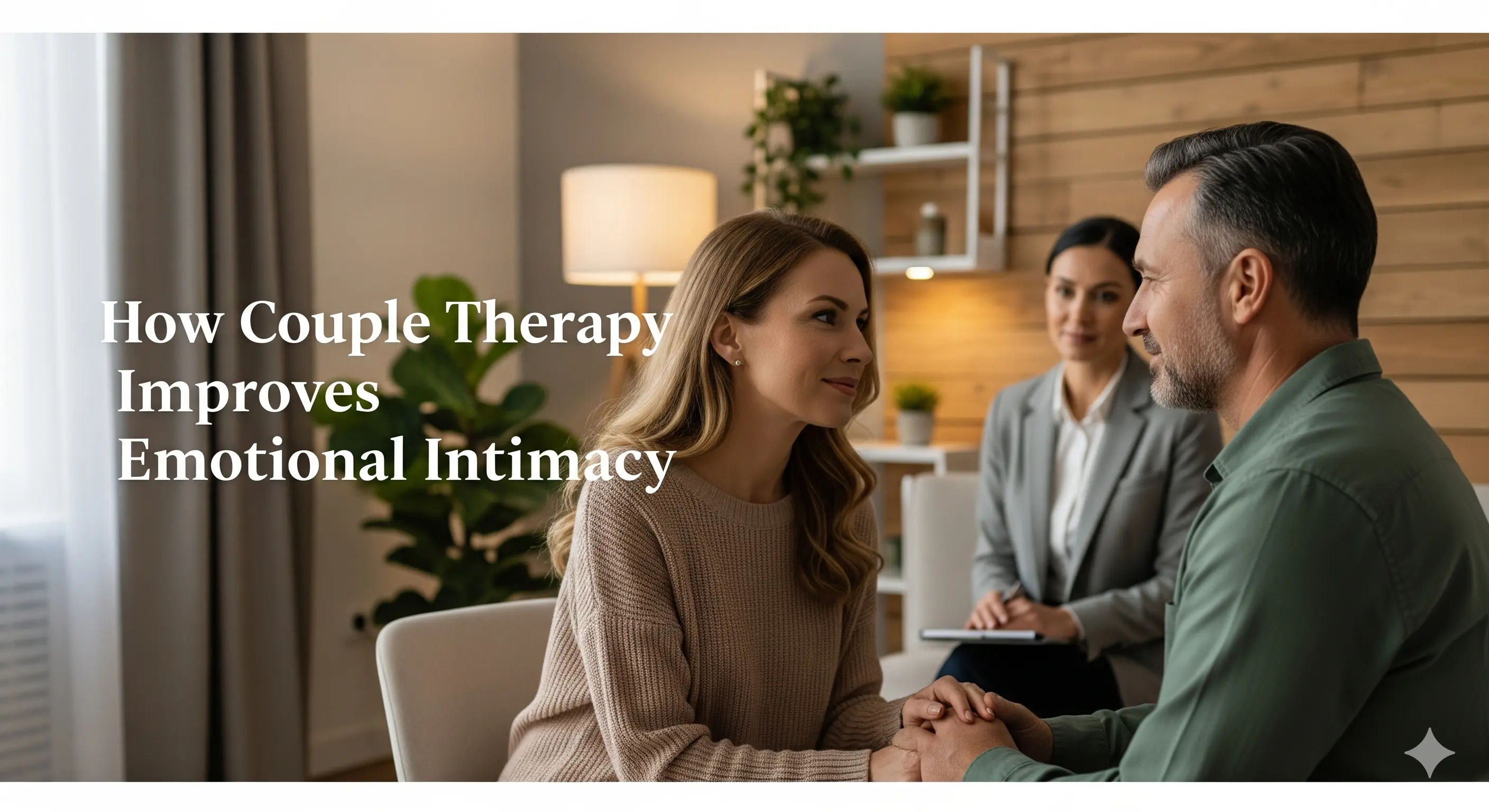
Couple therapy provides a neutral environment where both partners feel heard and respected. Therapists facilitate balanced conversations, helping each partner express their emotions clearly and without defensiveness.
2. Builds Effective Communication Skills
Communication issues often weaken emotional intimacy. Therapy teaches skills such as:
- Active listening
- Reflective responses
- Expressing needs calmly
These tools help couples share and receive emotional messages with care and clarity.
3. Helps Identify and Heal Underlying Patterns
Repeated conflicts or emotional distance often stem from deeper patterns, past experiences, or attachment wounds. A therapist guides couples to understand these patterns and begin healing them together.
4. Strengthens Trust and Emotional Safety
Trust grows when partners feel understood and valued. Therapy encourages vulnerability in a safe setting, allowing partners to open up without fear, strengthening emotional safety and closeness.
5. Teaches Constructive Conflict Resolution
Conflicts are normal, but unresolved disputes can drive emotional distance. Therapy teaches healthy conflict resolution techniques, helping couples work through differences compassionately and constructively.
6. Promotes Empathy and Understanding
Therapists help partners see each other’s emotional landscape. This increases empathy — the ability to understand and share your partner’s feelings — which is essential for intimacy.
Benefits of Improved Emotional Intimacy
Mental & Emotional Benefits
- Reduced anxiety in relationships
- Increased emotional support and understanding
- Greater psychological resilience
Relational Benefits
- Stronger trust and connection
- Better conflict management
- Enhanced satisfaction in partnership
Long-Term Growth
- More meaningful conversations
- Deeper emotional connection
- A more fulfilling bond
Types of Couple Therapy That Improve Emotional Intimacy
Several evidence-based approaches focus on strengthening the emotional bond between partners:
- Emotionally Focused Therapy (EFT) — Helps identify emotional patterns and build secure emotional bonds.
- The Gottman Method — Focuses on communication, conflict management, and shared meaning.
- Imago Relationship Therapy — Encourages empathy and transforms conflict into growth.
Signs You May Benefit from Couple Therapy
Consider couple therapy if you notice:
- Difficulty expressing emotions
- Frequent misunderstandings
- Emotional distance or avoidance
- Recurring relationship patterns
- A desire to deepen your connection
Tips for Getting the Most Out of Couple Therapy
- Be open and honest in sessions
- Practice communication techniques outside therapy
- Attend sessions regularly
- Choose a therapist both partners trust
Conclusion
Couple therapy is not just for relationships in crisis — it’s a powerful tool for improving emotional intimacy, building trust, and deepening connection. With the guidance of a skilled therapist, couples can learn how to communicate with care, understand each other deeply, and create a relationship rooted in emotional closeness and resilience.
Frequently Asked Questions (FAQ)
How long does couple therapy take?
Therapy duration varies, but many couples notice improvements within a few sessions when they commit to the process and practice skills consistently.
Can couple therapy help if only one partner attends?
Yes — even one partner committed to growth and communication can positively impact relationship patterns and emotional intimacy.
Is couple therapy only for married couples?
No, couple therapy benefits all types of partnerships, whether married, engaged, or dating.