What Is Nunu Massage? (Definition & Misconceptions)
Nunu massage is a colloquial term frequently used in Southeast Asia and parts of India to refer to a Nuru-style or Body-to-Body (B2B) massage. ### The Misconception vs. Reality
-
The Misconception: Many people believe that any massage labeled "Nunu" or "B2B" is a legal loophole for adult entertainment or "extra services."
-
The Reality: Nuru (Japanese for "slippery") is a technique where a therapist uses a special seaweed-based gel and their own body to apply pressure. In a purely professional and clinical sense, it is a form of tactile therapy. However, in the Indian market, the term is almost exclusively used as a euphemism for sensual services that often cross legal boundaries.
Clarifying Related Terms
-
Sensual Massage: Focuses on relaxation through skin-to-skin contact. While not a crime to "feel relaxed," it is highly scrutinized by police for potential sexual solicitation.
-
Therapeutic Massage: Includes Deep Tissue, Swedish, or Ayurvedic (Abhyanga). These are strictly medical/wellness-oriented and are the safest legally.
-
Prostitution: Any exchange of sexual acts for money. This is the "red line" that makes a massage illegal.
General Legal Status of Massage Services in India
Massage parlors and spas are 100% legal in India, provided they are registered as wellness businesses.
-
Wellness Recognition: The government recognizes spas as part of the health and tourism industry.
-
Professional Right: Courts (including the High Courts of Delhi, Bombay, and Madras) have consistently ruled that the right to practice a profession includes providing massage services.
-
Cross-Gender Legality: It is legal for a woman to massage a man (and vice versa) in most of India. Courts have struck down "cross-gender bans," stating they are unconstitutional, provided the service is professional and non-sexual.
When a Massage Service Becomes Illegal
A massage parlor becomes a criminal scene the moment it transitions from therapy to commercial sexual exploitation.
Clear Legal Red Lines:
-
Sexual Activity: Any form of sexual gratification (even "hand reliefs" or "happy endings") violates the Immoral Traffic (Prevention) Act, 1956 (ITPA).
-
Solicitation: If a therapist or manager asks for extra money for sexual favors, the premises can be classified as a "brothel."
-
Obscenity: Under Section 294 of the IPC (now BNS Section 296), any "obscene act" in a public or semi-public place (like a spa) is punishable.
-
Operational Failures: Parlors operating without a Health Trade License or in residential areas are considered illegal "dens."
Specific Focus: Body-to-Body / “Nunu” Style Massages
The legality of a "Nunu" massage depends entirely on intent and conduct.
-
Is the touch illegal? No. There is no law specifying which body part a therapist can use to apply pressure.
-
When does it become a crime? If the "Body-to-Body" contact involves genital contact or is performed with the intent of sexual arousal for a fee.
-
The Risk: Because "Nunu" is a common keyword used by illegal prostitution rackets, any parlor advertising this specific term is likely to be under constant police surveillance or subject to raids.
Legal Requirements for Providers
To be a "Legal Wellness Center" in India, a provider must meet these criteria (updated for 2026 standards):
| Requirement | Description |
| Municipal License | A valid Health Trade License from the local body (e.g., GHMC, BMC, MCD). |
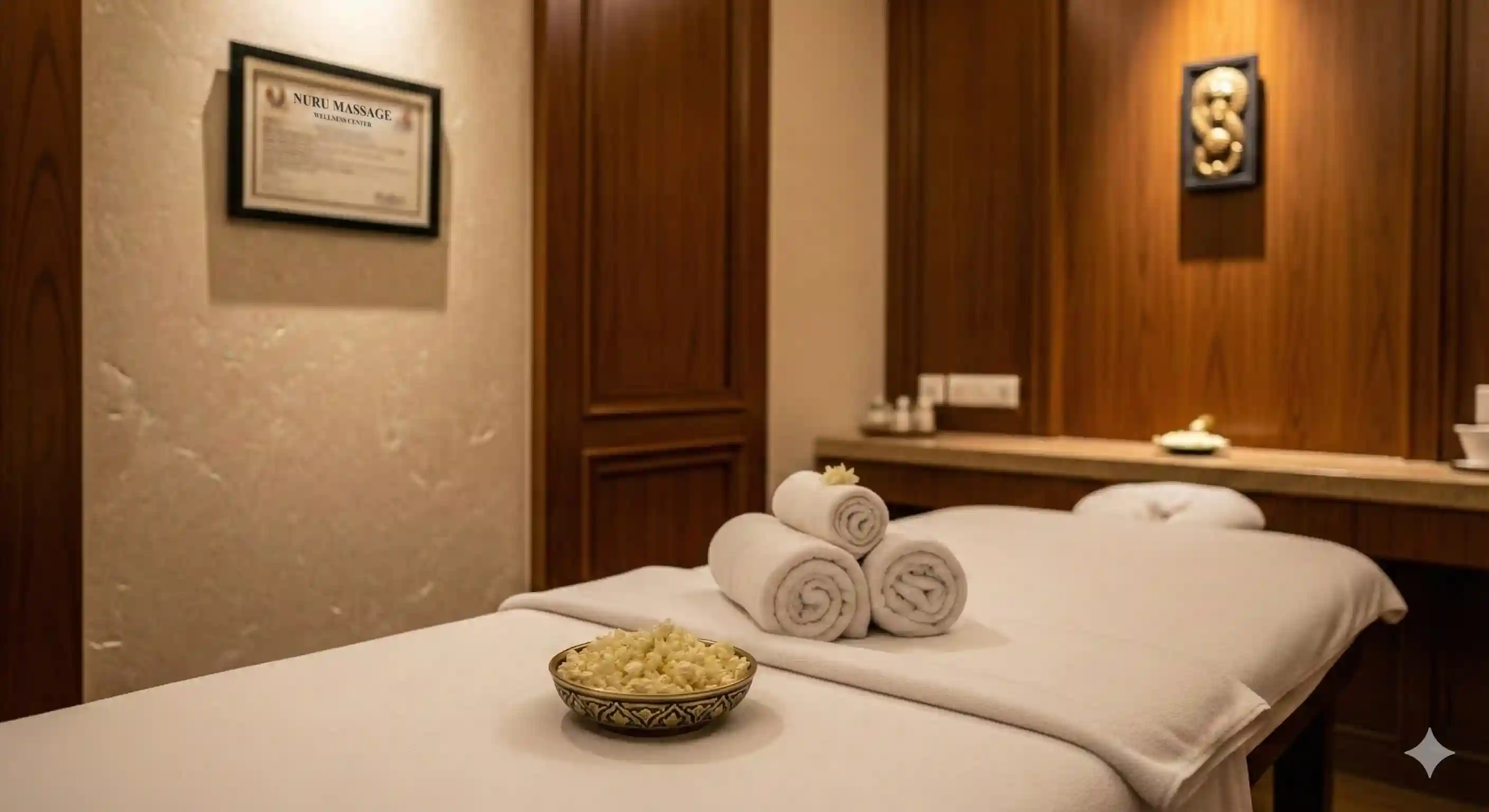
| Certification | Therapists must hold diplomas in Physiotherapy, Ayurveda, or Acupressure. |
| Open-Door Policy | Many states mandate that massage room doors must not have internal latches or locks. |
| CCTV | Mandatory cameras in the reception and common corridors (but not in treatment rooms). |
| Register | Must maintain a guest register with verified ID proofs (Aadhaar/Passport). |
Safety Tips for Clients
If you are visiting a spa and want to ensure you don't get caught in a police raid:
-
Check the Entrance: Legitimate spas have a clear name board and an open, professional reception.
-
Ask for a Bill: Legal spas always provide a GST invoice. If they only take "cash under the table," it is likely an illegal setup.
-
Avoid "Dark" Parlors: If the establishment has blacked-out windows, no professional website, and uses "coded" language on WhatsApp, stay away.
Specific Laws to Know (India & Telangana Context)
-
ITPA, 1956: Used to arrest owners, managers, and sometimes customers if sexual acts are proven.
-
BNS (formerly IPC): Sections on human trafficking and public obscenity.
-
Telangana Context: In cities like Hyderabad (Cyberabad Police), strict guidelines issued in 2025 mandate that all spas must close by 9:00 PM and must not operate inside residential buildings.
Common Myths vs. Legal Reality
-
Myth: "Any massage with oil and skin contact is illegal."
-
Reality: Professional oil massage (Abhyanga) is a core part of Indian Ayurvedic tradition and is fully legal.
-
Myth: "If the police raid, the customer is always arrested."
-
Reality: Unless the customer is found engaging in a sexual act, they are usually treated as witnesses, though the "social stigma" of being present during a raid is a high risk.
The Difference Between "Nunu/Nuru" and "Tantra"
Because terminology is often misused in the unregulated market, it is vital to distinguish between these concepts to avoid misunderstandings:
-
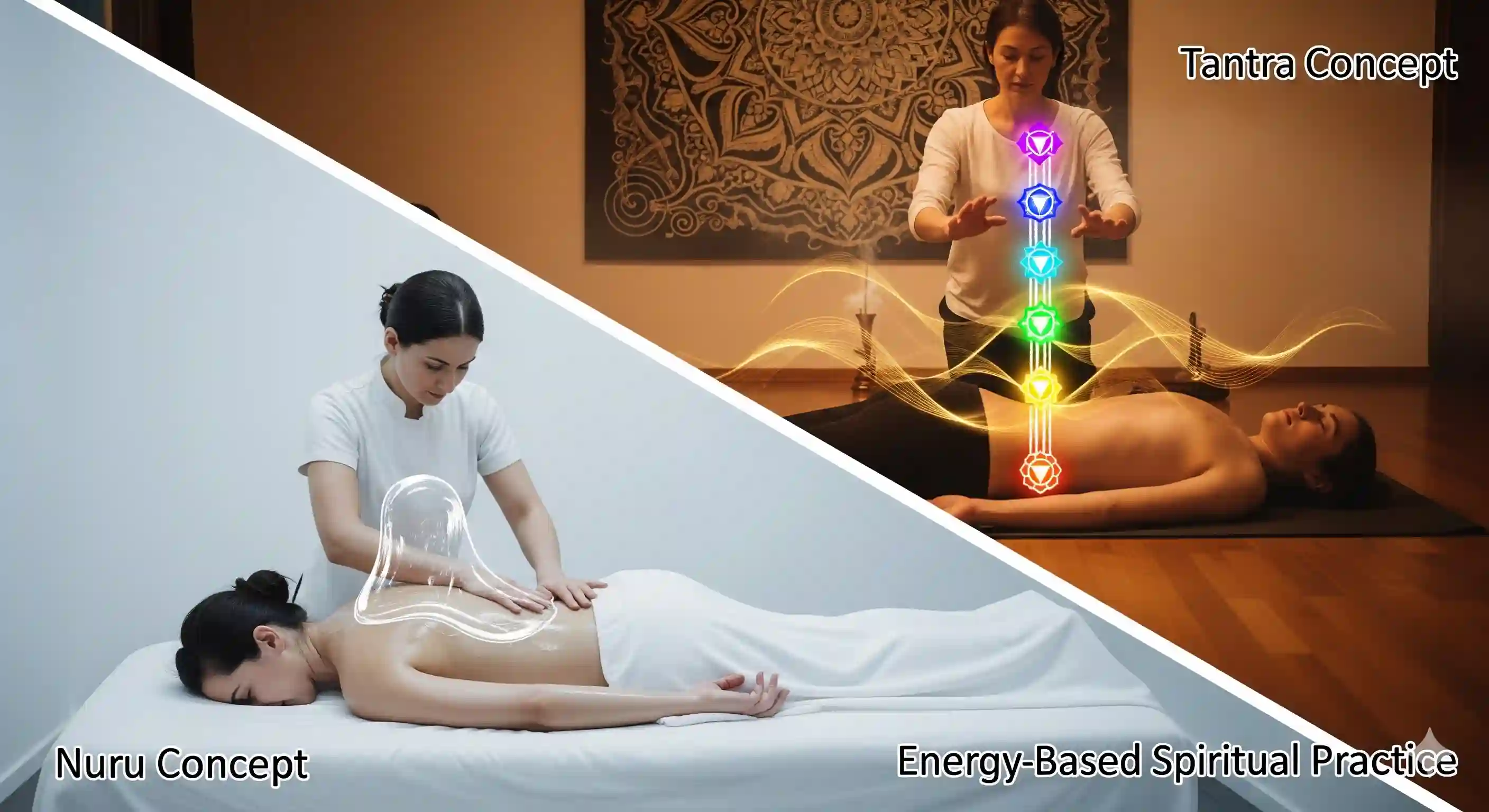
Nunu / Nuru (The Technique): Strictly speaking, "Nuru" is a Japanese massage technique using seaweed gel for body-to-body contact. It is a physical therapy focused on friction and skin conditioning. In India, however, the term is frequently co-opted by illicit parlors as a code for sexual services.
-
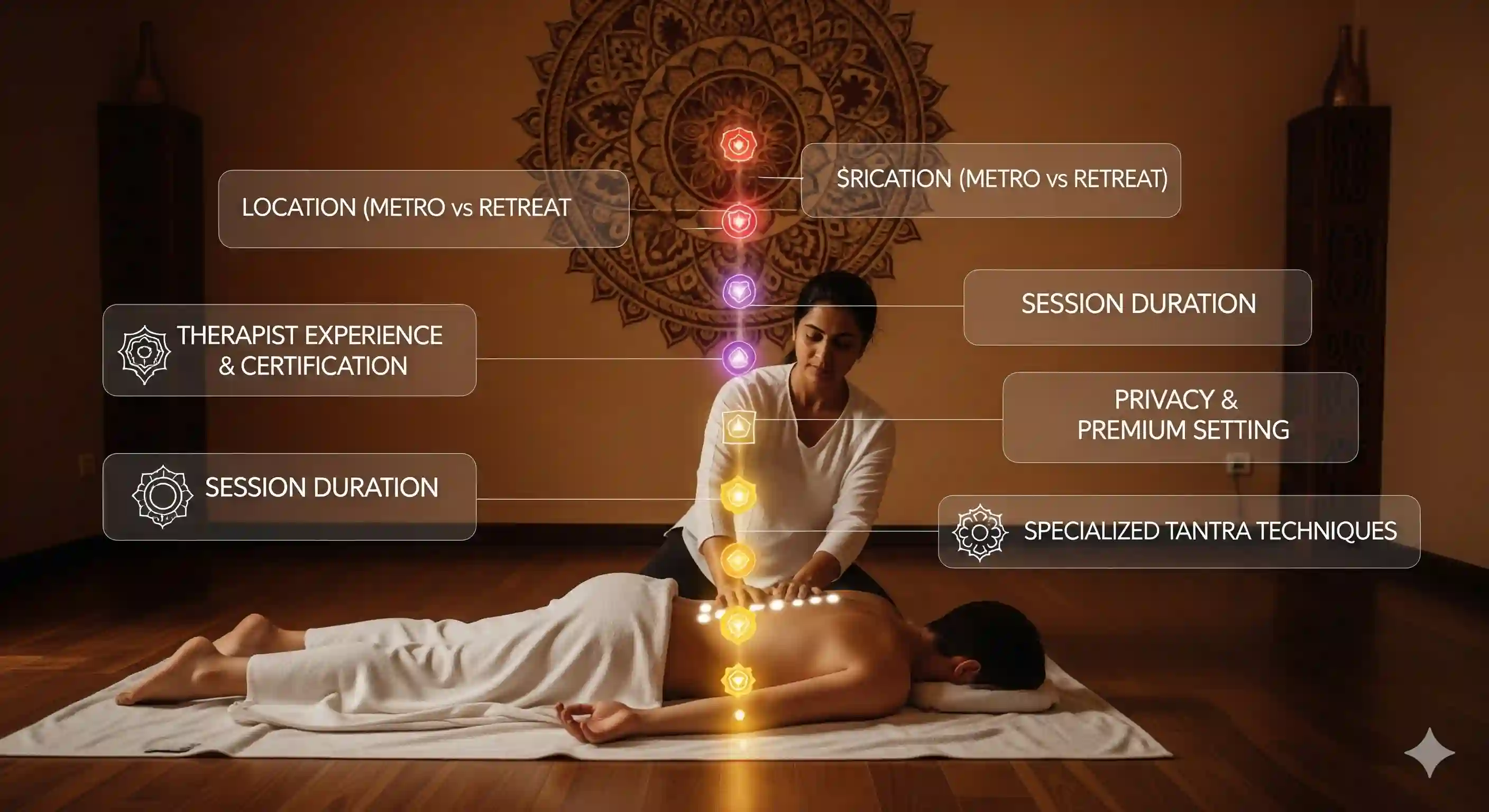
Tantra (The Spiritual Path): As explained in our What is Tantra? guide, Tantra is a spiritual discipline involving energy work, breath, and meditation. A genuine Tantra session focuses on healing trauma and awakening energy, not on physical gratification.
-
The Key Distinction: A legitimate Tantra session involves clear boundaries, pre-session consultation, and a focus on emotional release. A "Nunu" massage in an unlicensed parlor often lacks these professional standards and focuses solely on physical sensation.
Conclusion: The Clear Answer
Is Nunu Massage legal in India? If defined as a therapeutic body-to-body technique performed by a certified professional in a licensed spa without any sexual activity, it is legal. However, because the term "Nunu" is almost universally used by illegal brothels in India to sell sexual services, it is de facto illegal in most practical scenarios.